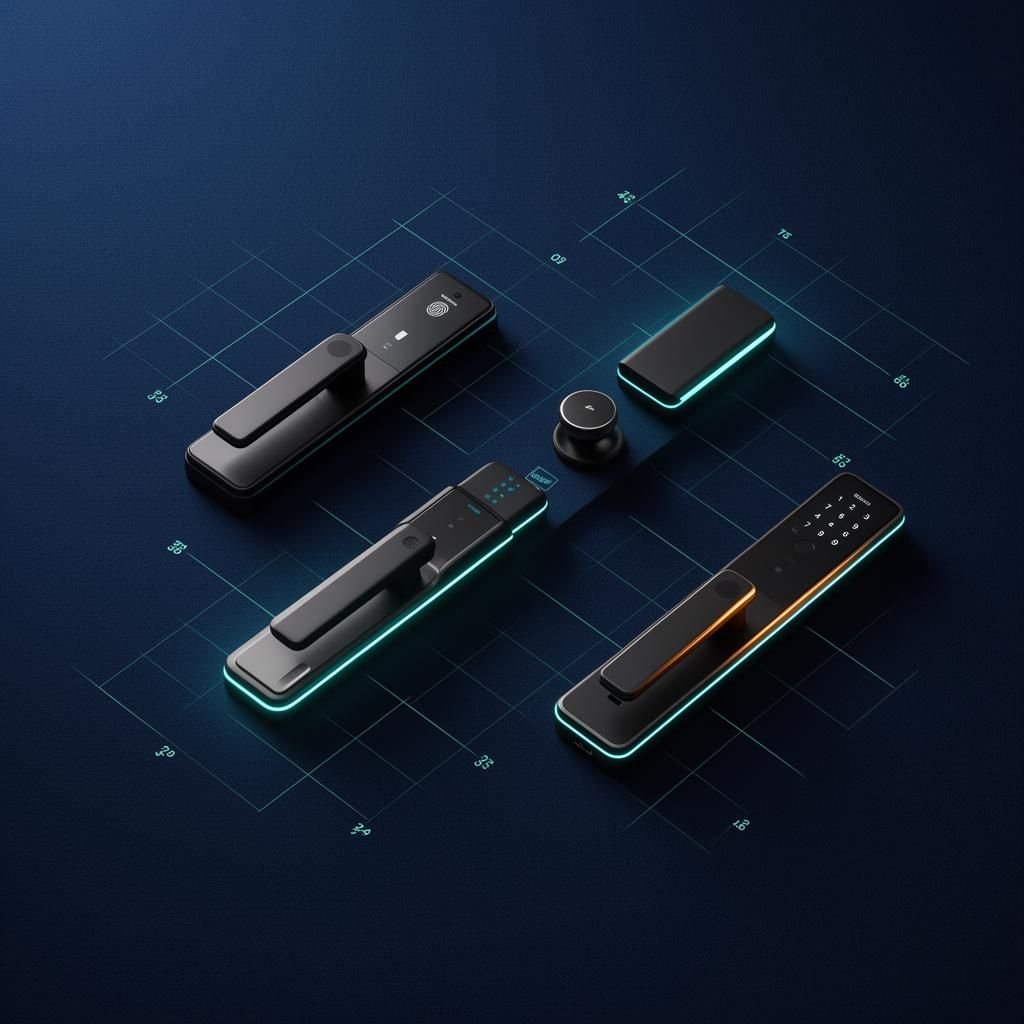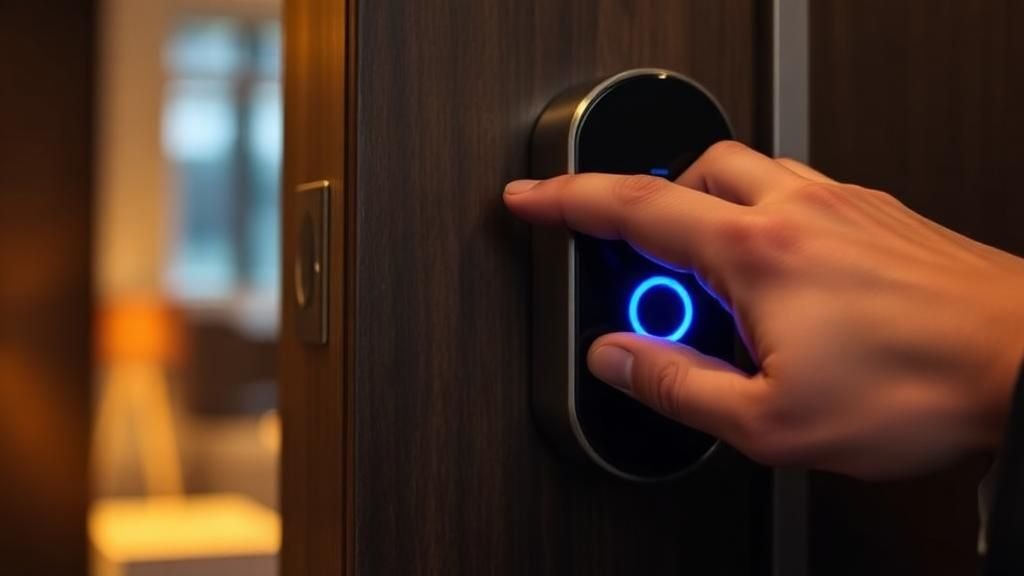
A code lock (also called a PIN lock or digital lock) is an electronic door lock opened by entering a PIN on a keypad. It's one of the most frequently chosen solutions today in single-family homes, apartments, offices and rental properties – mainly because it removes the need to carry keys and makes it easy to manage access for many people.
In this guide we show how to pick a code lock matched to your doors and how you use them, what to watch out for during installation and which mistakes to avoid. The whole text is based on 30+ years of experience with electronic door locks.
What you'll get from this article
- You'll understand how a code lock differs from a plain electronic lock
- You'll learn the criteria for choosing a code lock for home, apartment and office
- You'll find out how to check compatibility with your doors
- You'll get a pre-purchase question checklist
- You'll get to know the security features that actually matter
What is a code door lock
A code lock is a type of electronic lock in which the primary opening method is a PIN entered on a keypad – mechanical or touch. In practice most modern models are hybrid devices: in addition to the code they also support fingerprint, RFID card, mobile app or an emergency key.
Unlike a traditional mechanical lock, a code lock doesn't require carrying or duplicating keys. You can give a code to every household member, employee or guest – and change or remove it any time.
Code lock vs. electronic lock – are they the same?
An electronic lock is a broader term: it covers all electronically controlled locks, including fingerprint locks, cards, remotes and phone. A code lock is a subcategory – specifically a lock that always has a keypad. In most cases a code lock is also a hybrid lock (code + one or several other methods).
If you want a wider view, our separate article discusses the differences between smart and traditional locks.
Code lock for home or office – different needs, different models
Choosing a code lock starts with the question of where and how it will be used. A lock mounted on the front door of a single-family home has different requirements from one on an open space door used by 40 people.
Code lock for home and apartment
At home the main things are convenience and the safety of your loved ones. A good code lock for an apartment should:
- support 5–20 users (family, nanny, cleaning team)
- allow issuing a temporary code (e.g. for a courier)
- allow emergency opening with a mechanical key or via app
- run on batteries for at least 8–12 months
- be weather-resistant if mounted outside (IP65 or higher)
For most homes a code electronic lock in a surface-mounted or mortise version works well, depending on the door construction.
Code lock for offices, law firms and commercial premises
In an office a code lock has to handle more:
- 50+ users, often with different permission levels
- entry logs with date and user identifier (useful for audits and GDPR)
- integration with an access control system or an app managing several doors
- intensive use – hundreds of cycles per day
- ability to change codes remotely without an on-site visit
Here the choice often falls on locks with a Wi-Fi module or bridge, letting the administrator manage access from anywhere. If you're planning a bigger rollout, look at the article on access control systems for companies.
Compatibility – check this before buying
The most common mistake when buying a code lock is picking a model that physically doesn't fit the door. Before you hit "buy", check five things.
1. Door leaf thickness
Most electronic locks support leaves 35–110 mm thick. The exact range is in the product spec. Doors thinner than 35 mm or very thick (RC4-class anti-burglary doors) require dedicated models.
2. Cylinder type and cut-out
Polish doors mostly use a Euro-profile cylinder (Euro DIN). A code lock must fit this standard – otherwise you have to modify the cut-out or replace the whole mortise lock.
3. Backset (spacing of mounting holes)
That's the distance from the door edge to the centre of the handle hole – usually 60 or 70 mm. Check this before picking a specific model.
4. Handing (opening direction)
Some locks are universal (left and right), others require you to pick a version at ordering. The wrong hand means a return and weeks of waiting.
5. Door material and colour
Aesthetics matter too. Most code locks are available in satin chrome, black and graphite finishes – pick a variant that doesn't clash with the rest of the fittings.
Installing a code lock – DIY or with a professional?
Most surface-mounted code locks can be self-installed in 30–60 minutes using the existing cylinder. Mortise locks require experience with routing the frame and precise fitting – we recommend service installation there.
We describe this step by step in the smart lock installation checklist. From our experience: about 70% of complaints don't concern lock defects but installation errors – a badly positioned latch, over-stretched cables or over-tightened screws compressing the housing.
Security features worth paying attention to
Code locks are sometimes criticised for someone "seeing the code over your shoulder". Modern models handle this in several ways.
Anti-peeping mode (fake digits)
Lets you type any random digits before the real code. The lock will recognise the correct sequence inside a longer string. The person next to you sees 12 digits instead of 6.
Lockout after failed attempts
After 5 wrong attempts the lock should block the keypad for 1–5 minutes and send a notification to the administrator. That effectively hinders a trial-and-error attack.
Communication encryption
If the lock connects to an app, check that it uses AES-128 encryption or stronger. The TTLock standard used by SMART-LOCK models uses AES-128 and one-time tokens.
Emergency opening
A good code lock has at least two emergency methods: external 9V power (apply a battery when depleted) and a mechanical key or an offline-mode app.
More about practical security aspects is in the article pros and cons of smart locks.
How much does a good code lock cost
Code lock prices in Poland in 2026 look roughly like this:
| Segment | Price | Typical use |
|---|---|---|
| Entry | PLN 400–800 | interior doors, garage, utility rooms |
| Mid | PLN 800–1800 | apartment front door, small office |
| Higher / hybrid | PLN 1800–3500 | single-family home, office, short-term rental |
| Hotel / commercial | PLN 3500+ | hotels, multi-unit properties, access control systems |
The most common mistake: buying the cheapest model for a home front door. The difference between a PLN 500 and a PLN 1500 lock isn't just design – it's a different class of electronics, longer battery life, a stronger housing and real service support.
Checklist – what to check before buying a code lock
- ✅ Door type and leaf thickness
- ✅ Cylinder standard (Euro DIN or other)
- ✅ Hole spacing and opening direction
- ✅ Number of users you want to support
- ✅ Whether you need an app and entry logs
- ✅ Emergency power method (key, 9V, app)
- ✅ IP protection class if the lock will be outside
- ✅ Warranty and service availability in Poland
What's next
If you already know you want a code lock, start with a browse of the electronic code locks or see the whole electronic lock catalogue. If you're torn between a code and another opening method, our smart lock ranking 2026 will help.
Have specific doors and don't know which model to choose? Contact us – in a free consultation we'll pick a lock matched to your situation.