Smart door locks are growing in popularity both in homes and commercial properties. Before you decide to buy, though, it's worth understanding both the benefits and the potential limitations of these solutions. In this guide we present a comprehensive rundown of the pros and cons of smart locks along with practical tips that will help you make an informed choice of a model tailored to your needs.
Key takeaways
- Convenience and remote access are the main advantages – no physical keys, opening with a PIN code, fingerprint or smartphone, remote control from anywhere.
- Smart home integration enables advanced automations: locking the doors after arming the alarm, break-in attempt notifications, voice control.
- Dependence on power and potential software vulnerabilities are the main drawbacks – batteries need to be replaced and firmware requires regular updates.
- A well-chosen smart lock is safer and more convenient than a traditional one, but it requires a conscious choice of model and proper configuration.
- SMART-LOCK has specialised in door electronics for over 30 years – if in doubt, you can contact us via the contact form for a personal consultation.
What is a smart lock and how does it work?
A smart lock (intelligent lock) is an electronic device that controls access without a traditional key. It operates the bolt using various authentication methods:
- PIN code – entered on a numeric keypad
- Mobile app – e.g. the TTLock system on your smartphone
- RFID card – contactless identification
- Fingerprint – biometric recognition
- Remote opening – over the internet from anywhere
Most SMART-LOCK solutions can be installed by yourself, without interfering with the construction of anti-burglary doors. The devices communicate over Bluetooth and Wi-Fi, and the communication is encrypted in line with current security standards.
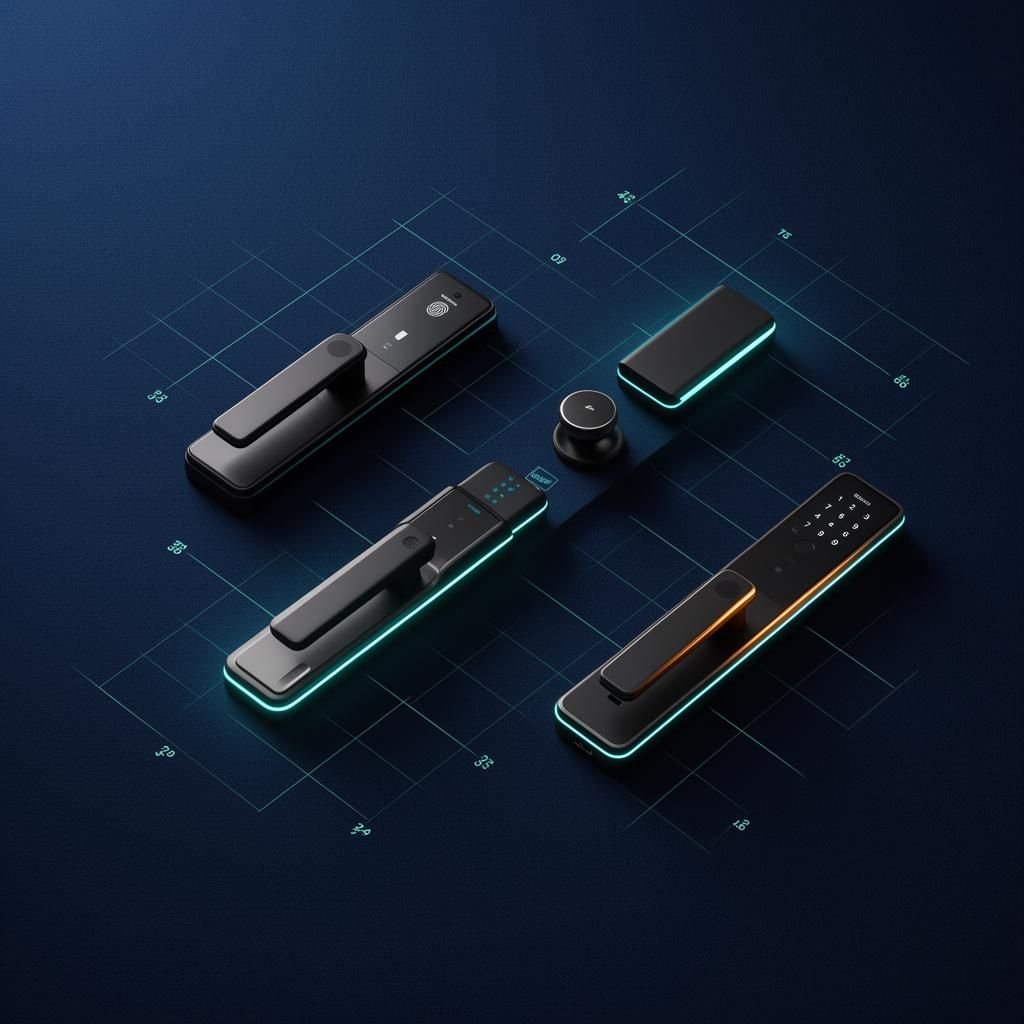
Example models include the Tuya H61B electronic fingerprint handle and the TTLock S35B electronic lock.
Advantages of smart locks – what do you actually gain?
Ease of use, security and time savings are the main reasons users choose electronic locks. Here are the concrete benefits:
Everyday convenience
- No need to carry physical keys
- Ability to open the door with a code, a card, a fingerprint or via the app
- Automatic unlock when you approach the door (auto-unlock)
Remote access management
- Time-limited codes for guests (ideal for short-term rentals)
- Remote unlocking for service technicians or couriers
- Full control over entry history – you know who could enter and when
Smart home integration
- Works with Tuya and TTLock apps
- Compatibility with voice assistants (Amazon Alexa, Google Home)
- Integration with Apple HomeKit
- Automations: locking the door after arming the alarm, turning on the light after entering
Additional security features
- Auto-lock after a set time
- Notifications about break-in attempts
- Lockout after repeated wrong codes
- Event log for access auditing
| Target group | Main benefits |
|---|---|
| Hotels | No cards to program, fast check-in |
| Airbnb/Booking rentals | Remote code sharing, no physical key handover |
| Offices | Employee access control, schedules |
| Homes and apartments | Easy access for family, guests, service |
Drawbacks and risks – what to bear in mind?
Like any electronic solution, smart locks have their limits. They require power, software and proper configuration.
Dependence on power
- Locks run on batteries (AA, AAA or accumulators)
- Replacement every several months to a year or more depending on usage intensity
- Risk of a lockout on dead batteries (though models warn in advance)
Digital vulnerabilities
- Potential Bluetooth/Wi-Fi protocol weaknesses
- Risk of MITM or brute-force attacks on account passwords
- Need for regular firmware updates
Privacy and the cloud
- Some solutions rely on the manufacturer's servers
- Entry logs stored in the cloud – possible data leaks
- Potential profiling of household behaviour
Costs
- Higher purchase price than traditional locks
- Possible extra spending on a Wi-Fi bridge or BMS integration
Compatibility
- Not every model fits every door
- Fire-rated or anti-burglary doors require certified solutions
- Professional installation is often needed
How to minimise the risks when choosing and using a smart lock?
Most drawbacks can be mitigated with a good model choice and conscious use. Here are the practical tips:
1. Choose reputable manufacturers – look for companies with documented security audits and regular updates. SMART-LOCK has been supplying solutions for hotels and office buildings for 30+ years.
2. Prefer models with local authentication – offline operation (code, card, Bluetooth) plus an emergency mechanical service key.
3. Keep good digital hygiene – unique, strong passwords for Tuya/TTLock accounts, 2FA enabled, regular app and firmware updates.
4. Manage the power – monitor battery status, use notifications, replace batteries before they fall below the alarm threshold.
5. Limit data sent to the cloud – pick a configuration that works mostly locally if privacy is a priority.
6. Reinforce the mechanical elements – solid cylinder, strike plate, anti-lever hinges, anti-burglary escutcheons.
Where do smart locks work best? Use case examples
Different types of properties have different needs – from self-check-in to advanced access control.
- Hotels and guesthouses – automatic code generation for guests, no problems with demagnetised cards, faster check-in/check-out
- Short-term rentals – remote code sharing, no need for in-person key handover, instant access revocation
- Offices and commercial properties – different permission levels for departments, access schedules, integration with monitoring and alarm systems
- Homes and apartments – easy access for children, seniors and nannies; automatic locking in the evening
SMART-LOCK handles smart lock installation and service across Poland (7 branches). Example models can be found in the product catalogue.
How to choose the right smart lock for your door?
Choosing a smart lock is a relatively simple process if you follow a few steps:
| Criterion | What to look for |
|---|---|
| Door type | Interior/exterior, material, fire-rated doors, existing cylinder |
| Usage intensity | A few entries a day (home) vs. dozens (hotel) |
| Authentication methods | Code, RFID card, fingerprint, smartphone |
| Ecosystem and app | TTLock, Tuya – localised language, frequent updates |
| Budget | Home vs. hotel models – price and feature differences |
If in doubt, send photos of your door to SMART-LOCK via the contact form. Specialists will help you choose the right model from the electronic locks or electronic handles range.