Key takeaways
We compare smart door locks with classic mechanical solutions, focusing on practical uses in homes, offices and short-term rental properties.
- Opening method – traditional locks require a physical key; smart locks offer a PIN, mobile app, RFID card or fingerprint.
- Remote management – a smart lock lets you control access from anywhere in the world and records entry history.
- Security – modern solutions use AES-128/AES-256 encryption, resistant to typical break-in methods.
- Convenience – no more losing keys and no costly cylinder replacements.
SMART-LOCK has 30+ years of experience in the electronic code handle market, serving over 10,000 customers through 7 branches across Poland. Below you'll find concrete product examples (TTLock S35B, H61B, S1B, H15B) and tips on choosing the right lock for your home or commercial property.
Introduction: what are smart door locks and who are they for?
Smart door locks are advanced devices combining locking mechanisms with wireless technologies – Bluetooth, Wi-Fi or NFC. The popularity of smart locks in Poland surged after 2020, driven by the short-term rental boom (the Airbnb market grew 40% in 2020–2023), the growth of remote work, and the smart-home automation trend.
Who are these solutions for? Primarily:
- Hotels and rental apartments (Airbnb, Booking)
- Offices and commercial properties
- Single-family homes and apartments
SMART-LOCK was created with demanding customers in mind – customers who value combining innovative technology with security and usability. Despite the shared goal – protecting your home – smart and traditional locks offer very different user experiences.
Differences between smart and traditional locks – overview
Before we go into detail, here's a map of the differences we'll cover:
| Aspect | Traditional lock | Smart lock |
|---|
| Opening method | Mechanical key | App, PIN, card, fingerprint |
| Remote control | None | Full control from anywhere |
| Security | Mechanical | Encryption + mechanics |
| Entry history | None | Logs in the app |
| Automation | Impossible | Smart Home integration |
| Power | Not required | Batteries (6–18 months) |
A well-chosen smart lock doesn't force you to give up mechanical protection – modern models combine both worlds, offering an extra safeguard in the form of a traditional emergency key.
Opening and locking: key vs. smartphone, code, card, fingerprint
Differences in opening methods are the most tangible thing users feel day to day. They also drive convenience and affect security.
Traditional locks:
- Opening only with a mechanical key
- Statistically, 1 in 10 people loses their keys each year
- Replacing the cylinder after losing a full key set costs PLN 200–500
- The need to cut duplicate keys for household members
Smart locks:
- Opening with a smartphone via Bluetooth/Wi-Fi
- PIN on the keypad – ideal for guests
- RFID card – proven hotel technology
- Fingerprint – 99% accuracy in under a second
Our shop stocks models for a range of applications:
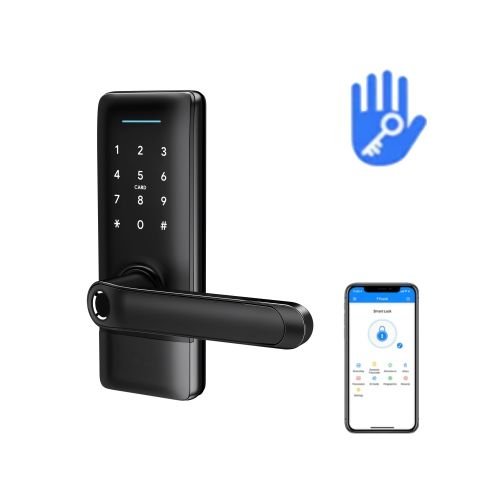
- TTLock S35B – electronic door handles with code and card
- TTLock H61B – elegant hotel handle with card and app support
- TTLock S1B – door lock with multiple opening methods
Every model keeps the option to open with a traditional emergency key. The TTLock app lets you lock the door with a single tap on your phone.
Remote management, entry history and automation with smart locks
Unlike a traditional lock, a smart door lock is part of a system – it works with an app, a network and other devices in your home.
Remote management:
- Lock/unlock from anywhere in the world (with Wi-Fi connectivity)
- Check the status – are the doors locked while you're away
- Ideal for rental owners and office managers
Event history:
- Logs record who opened the door, when and how
- Monitor kids coming home from school
- Verify entries by cleaning staff
- A traditional lock leaves no digital trace
Automation and Smart Home integration:
- Automatic bolt schedules (e.g. at 22:00)
- Integration with Smart Home – disable the alarm when the door is opened with a code
- Auto-unlock the office during working hours
Security: mechanics vs. encryption, physical vs. digital attacks
Both lock types aim to protect property, but use different defence mechanisms. Traditional locks rely on mechanical construction; smart locks combine it with electronics and encryption.
Threats to traditional locks:
- Picks open 70% of standard cylinders in under 5 minutes (Gerda data)
- Bumping, drilling, door prying
- No monitoring – the moment of a break-in is hard to establish
- Higher-class anti-burglary locks are more expensive and need specialist installation
Smart lock protections:
- AES-128 or AES-256 encryption (banking standard)
- Secure Bluetooth Low Energy and Wi-Fi protocols
- Lockout after 5–10 failed attempts
- Tamper alarms and push notifications
- Regular OTA (over-the-air) updates
Can a smart lock be hacked? Theoretically yes, but for the average burglar advanced electronics and encryption are a much harder barrier than classic brute-force methods. Choosing a reputable manufacturer with certifications and guaranteed regular updates minimises the risk.
Granting and managing access: physical vs. digital keys
The biggest advantage of smart locks is how you share access with others – no need to cut extra keys.
Traditional solutions:
- Cutting and physically handing over keys in a full set
- Risk that a former tenant keeps a key
- Costly cylinder change when control is lost
Smart door locks:
- Time-limited codes (e.g. for Airbnb guests Fri 6pm – Sun 11am)
- Different permission levels – owner, reception, service
- Instant access revocation from the app
- Easy way to manage many users
Practical scenarios:
- Rentals: sending the code to a guest before arrival – saves 15–25% of operating costs
- Hotels: RFID cards generated for each stay
- Office: access only during working hours
Explore SMART-LOCK products with advanced access management.
Power, reliability and emergency opening
Traditional locks are fully mechanical and require no power. Smart door locks run on batteries – which raises reliability questions.
Traditional locks:
- No power needed – they work regardless of electricity
- High reliability with proper installation and maintenance
- Mechanically durable but wear-prone (cylinder replacement every 5–10 years)
SMART-LOCK smart locks:
- Powered by AA batteries or accumulators
- Runtime: 6–18 months (depending on model and usage)
- Low-battery notifications 30 days in advance
- Easy swap without dismantling the whole lock
Professional installation by SMART-LOCK installers (7 branches in Poland) minimises operational risk. Contact us to book an installation.
How to pick a smart door lock? Practical tips and SMART-LOCK model examples
Choosing the right lock depends on the door type, property type and required features. Here's what to look at.
Key criteria:
- Door type – exterior (IP65 required), interior, glass
- Security level – home, office, hotel
- Preferred opening method – code, smartphone, card, fingerprint
- Integration – TTLock app, Smart Home systems
Recommended SMART-LOCK models:
| Model | Use case | Features |
|---|
| TTLock S35B | Front doors, offices | Code, card, Bluetooth, fingerprint |
| TTLock H61B | Exterior doors | RFID cards, Wi-Fi, app |
| TTLock S1B | Front doors | Multi-method, fingerprint |
| TTLock H15B | Interior doors | Advanced biometrics |
| TTLock for glass | Glass doors | Dedicated variant |
A wide selection is on the SMART-LOCK product page. Need help? Contact an advisor.
Summary: when to pick a traditional vs. smart lock?
Stick with a traditional lock if:
- You have simple use cases and a low budget
- You don't need remote management
- You don't want to use mobile apps
Choose a smart door lock if:
- You run a short-term rental or hotel
- You want to monitor when kids and household members come home
- You often forget your keys
- You manage an office or a property with many users
Modern SMART-LOCK solutions combine mechanical security with advanced electronics and encryption, giving peace of mind and full control. Visit smart-lock.pl and contact the advisors at one of our 7 branches in Poland to pick a solution tailored to your needs.