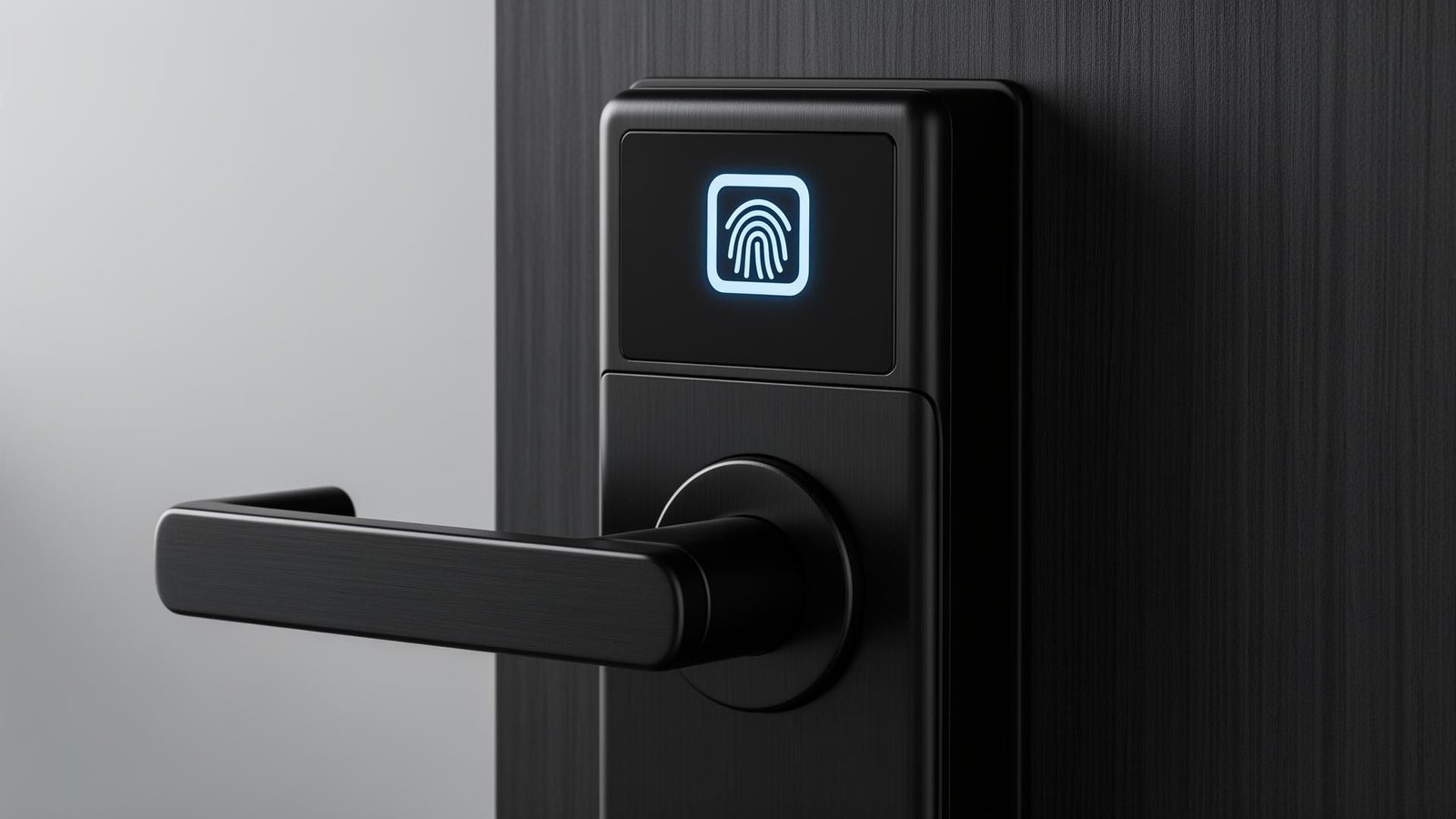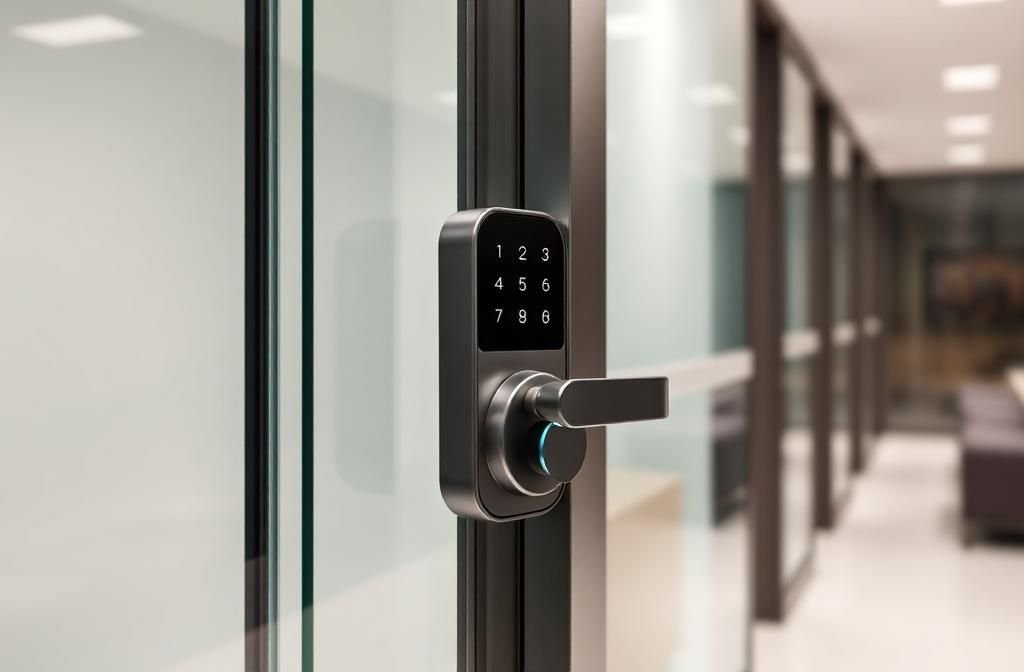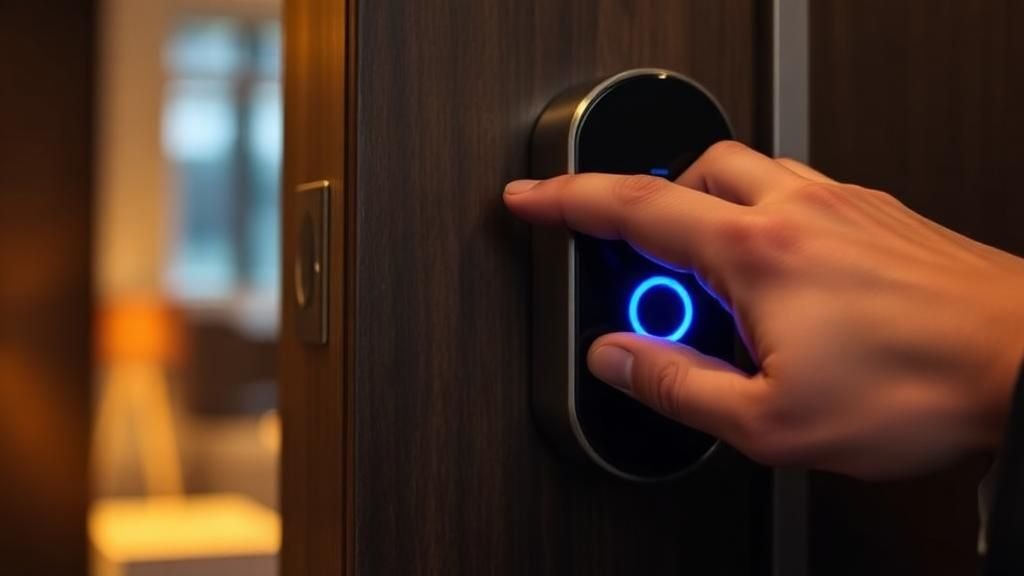
Keys can be lost, copied or simply forgotten. In offices and commercial properties there's an extra problem: no control over who enters and when. That's why more and more people and companies are turning to electronic door locks, and to smart lock solutions in particular.
But what actually is a smart lock, how does it work and is it really worth the investment? Let's check.
The problem with traditional locks – why a key isn't enough
Classic mechanical locks were the standard for years, yet today they increasingly fall short. The most common issues are:
- lost or copied keys,
- the need to replace the cylinder when the user changes,
- no entry/exit history,
- no way to grant time-limited access.
In practice that means more cost, less control and higher risk. It's no surprise that electronic door locks are becoming the alternative.
A digital door lock – the first step toward modern security
A digital door lock is a solution that removes the traditional key and replaces it with, say, a PIN code or an RFID card. It works especially well where:
- many people need access,
- keys often go missing,
- the code needs to change quickly.
It's a good "starter" option, but it has limits — usually no mobile app, no event history, no remote management.
Smart lock – what does it change in everyday use?
Smart lock – what does it mean in practice?It's a smart lock that combines the functions of a digital lock with a mobile app and an access management system.
With a smart lock you can:
- add and remove users from your phone,
- grant time-limited access (e.g. for hours or days),
- check opening history,
- avoid changing the lock when the user changes.
That's a huge difference especially in offices, co-workings and rental properties.
How does a smart lock work "under the hood"?
Although the technology sounds advanced, a smart lock is very simple:
- it's battery-powered (no cables),
- it connects to an app via Bluetooth or Wi-Fi,
- the app is the management centre.
Many modern solutions are built on proven platforms such as TTLock, which lets you manage many locks from one panel — locally and remotely.
Electronic door locks – comparing the options
Different types of locks are on the market. It's worth knowing the differences:
- mechanical lock – simple, but no control or flexibility,
- digital door lock – code or card, limited features,
- smart lock – full control, app, time-limited access.
If convenience and access management matter, a smart lock wins hands down. For a detailed comparison see smart vs. traditional locks.
Where does a smart lock make the most sense?
A smart lock works best where access is neither permanent nor uniform:
- in apartments and homes,
- in offices and companies,
- in co-workings,
- in hotels and rental apartments,
- in showrooms and consulting rooms.
The more users and access changes, the bigger the advantage of a smart lock.
Security – is a smart lock safe?
That's one of the most common questions. A well-designed smart lock offers:
- encrypted communication,
- event history,
- ability to revoke access instantly,
- no physical key that can be copied.
In practice that means more control than traditional locks.
How to pick the right smart lock?
Before buying, answer a few questions:
- what kind of doors do you have (wooden, metal, glass)?
- how many users will use the lock?
- do you need remote access?
- is the lock for private or commercial use?
Only then should you pick a specific digital door lock or smart lock.
When might a smart lock not be a good fit?
Although smart locks have many benefits, they aren't always necessary. They may not be the best choice if:
- only one person needs access,
- you don't need control or entry history,
- you only care about the simplest possible solution.
In those cases a plain digital lock may be enough.
Smart locks as the future of door hardware
The market points clearly in one direction: electronic door locks will gradually replace classic solutions. The reason is simple — they offer:
- more convenience,
- real security,
- flexibility,
- time and cost savings.
A smart lock isn't a gadget — it's a tool for modern access management.
Which smart lock should you pick?
If you're looking for a solution that combines convenience, security and control, a smart lock is the best choice.