- The key pillars of home protection are smart locks (including SMART-LOCK electronic handles), AI-powered monitoring, an integrated alarm system and strong network security.
- The latest technologies (AI, Matter/Thread, biometrics, Edge AI) reduce false alarms and speed up response to real threats.
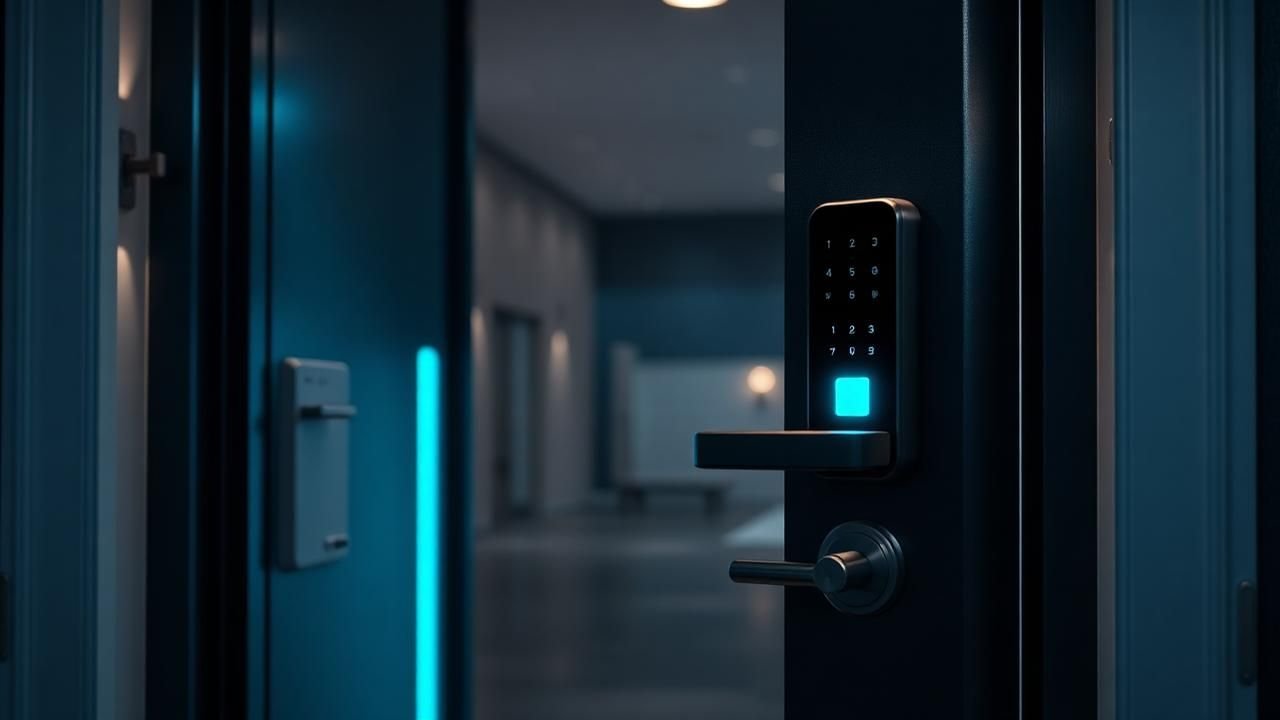
- SMART-LOCK code and fingerprint locks are one of the most effective elements of front-door protection in homes and apartments.
- You don't have to roll everything out at once – you can start with an electronic lock and a camera and gradually expand the system.
- The article gives you a concrete plan: from audit, through device selection, to indicative deployment costs.
What does modern home protection look like in 2026?
Home protection today is much more than solid doors and an alarm. It's an integrated ecosystem of physical, electronic and digital solutions working together as a single coherent system.
- Combined layers: solid doors and windows, smart locks, alarm systems, AI video monitoring, access control and network security.
- Remote control: since 2025, viewing the house, controlling locks and the alarm from the TTLock app from anywhere is the standard.
- Automated scenarios: the system reacts to threats itself – triggers the siren, turns on the lights, sends a notification to the owner.
- Data security: encryption of recordings, local video storage, strong passwords and regular firmware updates for smart home devices.
- SMART-LOCK philosophy: home protection is a combination of comfort, security and aesthetics, especially at the front door.
The latest home security technologies (2025–2026)
The year 2026 brings a breakthrough in how we approach home protection. Systems no longer just record – now they detect anomalies and react before a break-in occurs.
Key technology areas:
- AI in monitoring – image analysis, silhouette recognition, fewer false alarms
- Matter and Thread – integration of devices from different manufacturers
- Biometrics and SMART-LOCK – code, fingerprint and app-based locks
- Autonomous alarms – LTE/5G connectivity, operation without mains power
- Edge AI – local data processing
All of these solutions can be integrated within a single smart home ecosystem, and security becomes part of everyday home management.
AI in monitoring – detect and react instead of just recording
Modern IP cameras use Deep Learning algorithms for real-time image analysis. It's a fundamental shift in the approach to monitoring.
- Object recognition: AI precisely distinguishes people, animals, vehicles and static objects (e.g. parcels at the door).
- Fewer false alarms: the system ignores moving trees, car headlights or lighting changes – notifications only cover real events.
- Behavioural analysis: detects unusual behaviour (loitering by the door) and triggers a scenario: turning on lights, playing a sound, sending an alert.
- Edge AI: local image processing directly on the camera improves privacy and reaction speed.
Matter and Thread standards – one language for security devices
Matter and Thread are a revolution in how smart home devices from different manufacturers talk to each other.
- Matter (2025–2026 releases): cameras, motion sensors, sirens and electronic locks from different brands work together without a fleet of separate apps.
- Thread: an energy-efficient mesh network – door opening, water leak or CO sensors communicate even where Wi-Fi coverage is weak.
- Practical tip: when picking new devices in 2026, look for Matter compatibility – it will make future system expansion easier.
Advanced biometrics and SMART-LOCK smart locks
Traditional keys are being replaced by electronic locks opened by code, card, fingerprint or smartphone. The Aliro standard additionally simplifies communication with phones and watches.
SMART-LOCK is one of the leading manufacturers of electronic PIN-code handles in Poland:
- Over 30 years of experience in the security market
- 10,000+ satisfied customers
- 7 branches across Poland ensuring quick installation and service
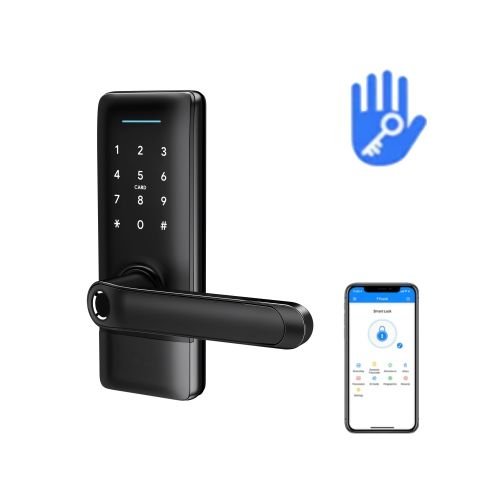
Models in the TTLock line, such as TTLock S1B, TTLock H61B or TTLock H15B, let you:
- Remotely grant and revoke codes for Airbnb guests or the cleaning crew
- Open by code, card, app or fingerprint
- Review entry history in the TTLock app
Biometric fingerprint handles eliminate the need to carry keys while maintaining a high level of security (biometric data is encrypted).
Autonomous security and multi-channel connectivity
Modern alarm systems "defend themselves" against power or internet failures.
- Panels with LTE/5G: built-in cellular modules and backup accumulators that keep the system running for several hours.
- Automatic switchover: with no internet, the system sends an SMS or push notification over the cellular network.
- Outdoor sensors: on detected motion they trigger floodlights, sirens and, on larger properties, patrol drones.
- Emergency scenarios: the user can program reactions to different situations (power outage, router sabotage).
Privacy, encryption and local data storage
Concerns about leaks from the cloud are legitimate. That's why solutions with local storage are growing in popularity.
- E2EE encryption: end-to-end encryption means even the manufacturer can't see your recordings.
- Local storage: recordings saved on a NAS or microSD card – data doesn't leave your property.
- Edge AI: image processing done locally, without sending anything to external servers (GDPR-friendly).
- Manufacturer choice: check the privacy policy and whether the device works without a mandatory cloud subscription.
The key elements of physical home protection
Even the best electronic system won't replace solid doors and windows. Home protection should be layered.
Main physical components:
- Doors and windows with an appropriate resistance class (RC3–RC4)
- Anti-burglary fittings and reinforced hinges
- External roller shutters with automation
- Lighting with motion sensors
- Smart locks and electronic handles
An investment in a good front door and a SMART-LOCK electronic lock often delivers the biggest security uplift for a reasonable budget.
Doors, windows and shutters – the first line of defence
- Exterior doors: choose models rated RC3–RC4, with a reinforced frame.
- Windows: lockable handles, anti-lever catches, optionally reed switches linked to the alarm.
- External roller shutters: make it harder to reach the windows and integrate with the smart home system (automatic control).
- Planning: when replacing joinery, factor in cooperation with opening sensors right away.
SMART-LOCK smart locks and electronic handles as the access control hub
Electronic locks solve the problem of lost keys and easy copying. They're the access control hub of a modern home.
Typical use cases:
- Single-family house – no keys, entry history, automations
- City apartment – remote access sharing for guests
- Short-term rental – time-limited codes for Airbnb/Booking guests
- Office – employee access control, reporting
Key features of SMART-LOCK products:
- Opening by code, card, app or fingerprint
- One-time or time-limited code generation
- Entry history in the TTLock app
- Integration with the smart home and building automation
The SMART-LOCK network of 7 branches in Poland ensures fast installation and service – especially important when reliability matters. See the full electronic door locks catalogue.
Monitoring, alarm and automation – how to build a coherent home protection system?
A comprehensive smart home connects video monitoring, alarm, locks and automation into one logical ecosystem.
- Monitoring – indoor and outdoor cameras with AI
- Alarm – motion, opening, smoke, carbon monoxide and water leak sensors
- Locks – smart access control
- Automation – "leaving home" and "night" scenarios
Pick an ecosystem (Matter, Google Home, Apple HomeKit, TTLock) as the central "brain" controlling the devices.
Cameras, video door phones and sensors – the eyes and ears of the home
For a typical single-family house, consider:
- A camera by the main entrance
- Cameras covering the garden/driveway
- A video door phone at the gate with two-way audio
- Motion, door/window opening, smoke and water leak sensors
Modern IP video door phones offer integration with electronic locks – you can unlock the door remotely after verifying the visitor.
Security automations – what's worth programming?
- "Leaving home" scenario: one tap turns off the lights, arms the alarm, locks the SMART-LOCK doors, shutters go into "away" mode.
- "Night" scenario: after a set hour the gate and doors lock automatically, the interior alarm switches to standby.
- Preventive scenario: detecting suspicious motion switches on garden lighting and plays a warning sound.
The TTLock app integrates with other systems – e.g. an automatic notification when a child opens the door during a set time window.
Cybersecurity and data protection in home security systems
Weak passwords and missing updates can undo even the best physical protection. Every smart device is a potential attack target.
- Transmission encryption (TLS) is becoming the standard
- 2FA for critical apps
- Regular firmware updates
- Isolating the IoT network from the main home network
Practical cybersecurity rules for home users
1. Change default passwords on the router, cameras and locks – use unique, long passwords.
2. Enable 2FA wherever possible (TTLock, cloud accounts).
3. Update device firmware and mobile apps regularly.
4. Create a separate Wi-Fi network for smart devices and guests.
5. Only install official apps – e.g. the official TTLock app to control SMART-LOCK devices.
A step-by-step home protection rollout plan
You don't have to do everything at once. Start with the key elements and gradually expand the system.
Rollout stages:
1. Audit current protection
2. Set priorities and budget
3. Choose an ecosystem/standards
4. Select equipment (including SMART-LOCK locks)
5. Installation and configuration
6. Testing and scenarios
7. Regular maintenance
Step 1–3: Audit, priorities, ecosystem choice
- Audit: check the quality of doors and windows, the number of building entries, the state of the alarm and Wi-Fi network.
- Priorities: front door protection, driveway, garden; set a budget; decide DIY vs. professional installation.
- Ecosystem: picking one at the start (Matter, Google Home, TTLock) makes future integration easier.
Step 4–7: Device selection, installation, testing and maintenance
- Start with the biggest impact: a SMART-LOCK lock on the front door, an outdoor camera, a simple alarm panel.
- Installation: many SMART-LOCK models can be installed yourself; for peace of mind, use the network of 7 branches in Poland.
- Testing: check notifications, scenario behaviour, system behaviour on a power outage.
- Maintenance: updates, battery monitoring, physical element checks.
Need a personalised quote? Contact the SMART-LOCK experts.
How much does modern home protection cost in 2026?
Costs depend on the scale of the rollout and the chosen solutions.
- Basic (apartment) – SMART-LOCK lock + 1–2 cameras + sensors: PLN 1,500 – 4,000
- Extended (house) – several cameras, alarm, shutters, several locks: PLN 8,000 – 25,000
- Professional – wired install, photovoltaics, advanced monitoring: PLN 30,000+
Additional costs:
- Electronic lock installation: PLN 200–500 per door (or DIY)
- Cloud subscriptions: several hundred PLN per year (prefer solutions that work locally)
Investing in home protection pays back not only in safety – some insurers offer discounts for monitoring and alarms.
Why choose SMART-LOCK locks and electronic handles for home protection?
SMART-LOCK is a proven partner in home protection, combining experience with modern technologies.
SMART-LOCK strengths:
- 30+ years of experience in the security market
- 10,000+ satisfied customers (hotels, apartments, homes, offices)
- 7 branches in Poland – fast installation and service
- Convenience: no traditional keys, remote control
- Security: encryption, codes, biometrics
- Entry history: full control in the TTLock app
A broad range of models means you can pick a solution for almost any door. Check the full SMART-LOCK product catalogue.
Need a personal consultation? Contact us – we'll help pick the right lock for your home, apartment or investment.